

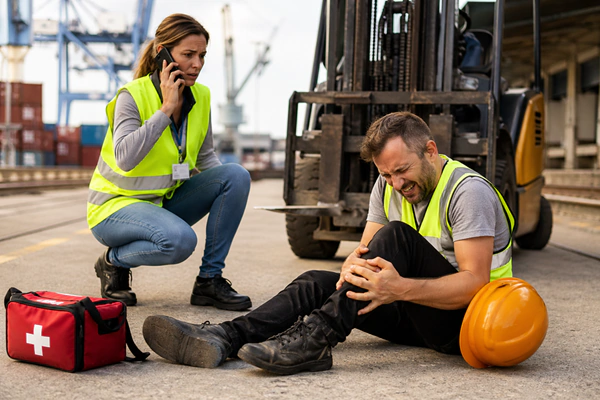
Plymouth has long been shaped by its connection to the sea, with dockyards, shipping operations and large-scale warehousing forming a major part of the local economy. Workers regularly operate around heavy machinery, vehicles, and complex logistical systems in these active, fast-moving, and often physically demanding environments.
In places like Devonport Dockyard or the surrounding industrial zones, work rarely slows down. Operational pressures, deadlines, and deliveries necessitate the continuous execution of tasks, often across shifts. Despite the expectation of strict safety standards, malfunctioning systems or improper risk management can lead to accidents.
For workers, an injury in this kind of setting is not just a momentary incident. It can disrupt income, recovery, and long-term employment. What often follows is uncertainty. Was the accident avoidable? Who is responsible? And what rights does the injured worker actually have?
Understanding how these situations are assessed is essential. Workplace injuries in dockyards and warehouses are rarely as simple as they first appear, and the circumstances surrounding them often determine whether a claim can be made.
How workplace accidents happen in these environments
Plymouth’s dockyards and warehouses pose a variety of risks not commonly encountered in conventional workplaces. The scale of operations, the equipment involved, and the pace of work all contribute to the likelihood of injury if proper controls are not maintained.
A worker may be moving goods across a warehouse floor while forklifts operate nearby. In a dockyard, workers may lift, transport, or secure heavy materials in areas with limited space and reduced visibility. Even a small lapse in coordination or communication can lead to serious consequences.
Slips and trips are also common, particularly when surfaces are wet, uneven, or obstructed. Poor lighting, cluttered walkways, or inadequate maintenance often compound these hazards in industrial environments.
Manual handling is another frequent cause of injury. Lifting or moving heavy items without correct training or support can result in long-term strain or sudden injury. Over time, repeated exposure to these conditions can lead to cumulative damage, not just one-off incidents.
Where responsibility becomes unclear
After an accident, responsibility is not always immediately obvious. Employers have a legal duty to provide a safe working environment, but the circumstances surrounding each incident can vary significantly.
In some cases, the issue may be linked to equipment that was not properly maintained. In others, it may relate to insufficient training or unclear instructions. There are also situations where multiple parties are involved, particularly in dockyards where contractors, subcontractors and different teams operate in the same area.
This is where disputes often arise. An employer may argue that the worker failed to follow procedures. A worker may believe that those procedures were never properly explained or enforced. Without a clear understanding of what happened and why, these situations can quickly become complex.
In practice, establishing responsibility often comes down to identifying whether reasonable steps were taken to prevent the risk in the first place, such as implementing safety training and maintaining equipment properly.
Common factors that lead to employer liability
While every case depends on its facts, certain patterns appear regularly in workplace injury claims involving industrial settings:
- Inadequate training for specific tasks or machinery
- Unsafe or poorly maintained equipment
- Failure to carry out proper risk assessments
- Lack of supervision in high-risk areas
- Pressure to work quickly at the expense of safety
These factors do not automatically guarantee a successful claim, but they often form the foundation of how liability is assessed.
What rights do injured workers have?
Workplace safety laws in Plymouth’s dockyards and warehouses protect employees by requiring employers to take reasonable steps to prevent harm. When these standards are not met, and an injury occurs as a result, the injured worker may have the right to pursue compensation.
This includes situations where the injury leads to time off work, ongoing treatment, or lasting physical impact. Importantly, making a claim is not about placing blame without reason. It is about determining whether the conditions that led to the injury should have been prevented.
Workers are also protected from being treated unfairly for raising concerns or pursuing a claim. Employers are expected to handle such matters appropriately, and retaliation or dismissal linked to a claim can raise separate legal issues.
A realistic example from a warehouse setting
Consider a warehouse worker in Plymouth tasked with moving stock between storage areas. The role involves regular interaction with forklifts and other moving equipment.
During a shift, the worker is instructed to move items through an area where forklift activity is on-going. There is no clear separation between pedestrian walkways and vehicle routes. A reversing forklift strikes the worker during the task, causing injuries.
At first glance, the incident may appear to be an unfortunate accident. However, when examined more closely, questions begin to emerge. Was there a safe system of work in place? Were walkways clearly marked? Was the forklift operator properly supervised? Were risk assessments carried out and followed?
If it becomes clear that safety measures are lacking or not enforced, responsibility may shift toward the employer. In cases like this, the outcome depends on how effectively these factors can be demonstrated.
What to do after a workplace injury
After an accident in a dockyard or warehouse environment, the steps taken in the immediate aftermath can influence how the situation develops, including the potential for recovery and the legal implications of the incident.
Reporting the incident internally is important, as it creates a formal record. Seeking medical attention ensures that injuries are properly documented and treated. Keeping a record of what happened, including any relevant details about the environment or conditions, can also be useful later.
While these actions do not determine the outcome on their own, they help establish a clear account of events, which becomes increasingly important if responsibility is disputed.
Final thoughts on workplace injuries in Plymouth
Work in Plymouth’s dockyards and warehouses carries inherent risk, but that does not mean injuries are simply part of the job. Workers can ask what went wrong if employers don’t manage risks.
Each case depends on its circumstances, and understanding those details is key to determining whether a claim is possible. For those unsure about their position, seeking guidance from professionals such as Marley Solicitors can help clarify the next steps and provide a clearer view of what options are available.